Work style
What to Wear to a Job Interview: A Practical Guide for Women
The goal is to look like the person the team already hired, one step more polished.
In shortDress one step above the job's everyday dress code, in clothing that fits well and lets you move comfortably. A tailored jacket, a simple top and closed shoes cover most roles. Research the company's photos and dress code before you choose.
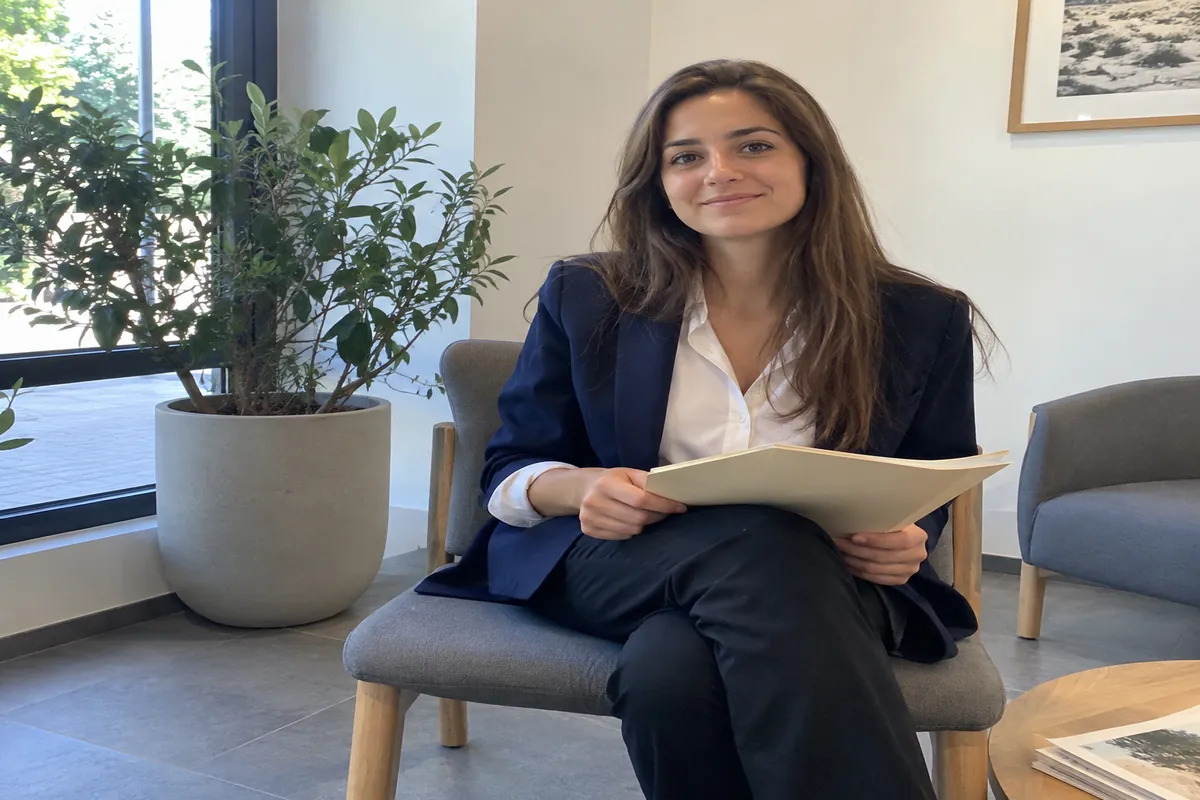
An interview outfit has one job: to let the interviewer focus on your answers. It should look like the person the team would already expect to see, one step more polished than the everyday standard. Clothes that fit well, that you can move in, and that match the role are what matter most.
Start with research, not with a wardrobe
Before you choose anything, look at three sources. The company's own website and social pages show what people wear in real photos. Videos of the team, or conference photos, are often more useful than a stock image. Your recruiter may also describe the usual dress code if you ask directly. Write down the answer, then decide how far above it you will dress.
Industry matters too. Finance, law and senior management roles usually expect a full suit. Creative, product and marketing roles accept tailored separates with more color and texture. Clinical, trade and field roles favor clean, practical outfits with closed shoes.
A reliable interview outfit
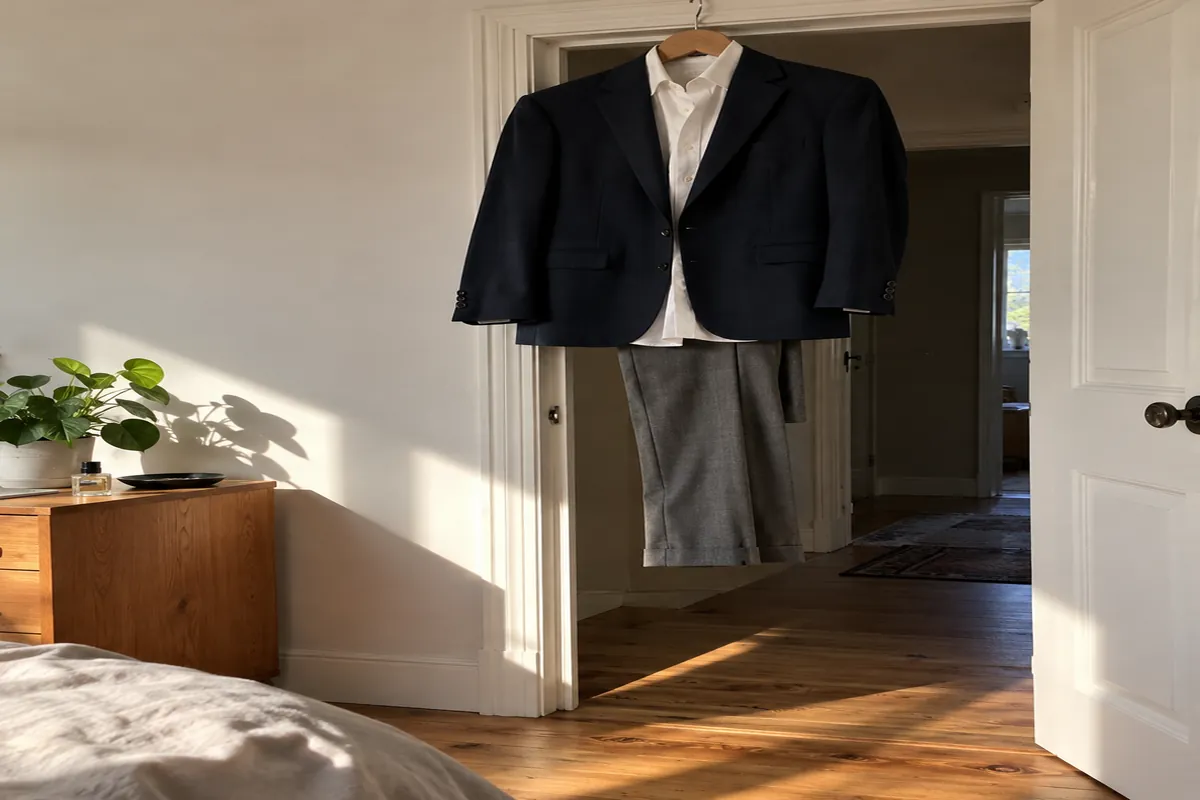
The most reliable outfit is a navy or charcoal tailored jacket, a plain shirt or blouse in white, cream or a soft neutral, and trousers or a knee-length skirt in the same family. Add closed shoes with a low or medium heel, and keep jewelry to one or two small pieces. This combination works in almost every office, and it will not distract from your answers.
Color should be quiet. A tone such as deep teal, plum or rust can work for a creative role, but a bright red jacket can pull the focus. If you want a touch of personality, use a scarf, a bag or a single piece of jewelry rather than the main garment.
Interactive tool
True or false: is your outfit ready?
Open each line to check the answer. Each one takes a few seconds.
1. A blazer should close comfortably on its middle button without pulling.
True. If the buttons pull or the fabric gapes, the jacket is the wrong size or needs tailoring. Try the jacket with your hands on your hips and your arms raised.
2. Heels are always the safest choice for an interview.
False. Heels that make you walk carefully or stand unevenly can distract you. Choose a height you can walk in comfortably for an hour, and carry flats in your bag if the building involves stairs.
3. Strong perfume helps you make an impression.
False. Some interviewers and colleagues are sensitive to scent, and a faint fragrance is safer than a strong one. Skip it on the day if you are unsure.
4. You should test the outfit by sitting, reaching and standing up.
True. Sit in a chair, cross your legs, reach forward to lift a bag from the floor, and stand up. If something rides up, pulls or shows through, change it before the day.
5. Visible logos on a bag or shoes are fine if they are from a well-known brand.
False. Logos draw attention and can read as the outfit wearing you. Choose plain pieces with good shape instead.
Fit checks before the day
Try the complete outfit on at least two days before the interview. Check the fit in a daylight room and a mirror that shows your full body. Look for creases at the armpit and across the back, a hem that sits below the knee for a skirt, and trouser legs that break lightly at the front of the shoe. A quick visit to a tailor for a hem or a sleeve can make a good suit look custom.
Iron or steam the clothes the night before, and check the shoes for scuffs. Polish or clean them, and put a spare pair of tights or socks in your bag. Pack a small comb, a lint roller and a plain hair tie.
On the morning
Keep the morning plain. Dress with time to spare, and eat something light. Carry the outfit in a garment bag if you can, so it does not crease in transit. Arrive ten to fifteen minutes early, which gives you time to check your reflection and settle your breathing before you meet anyone.
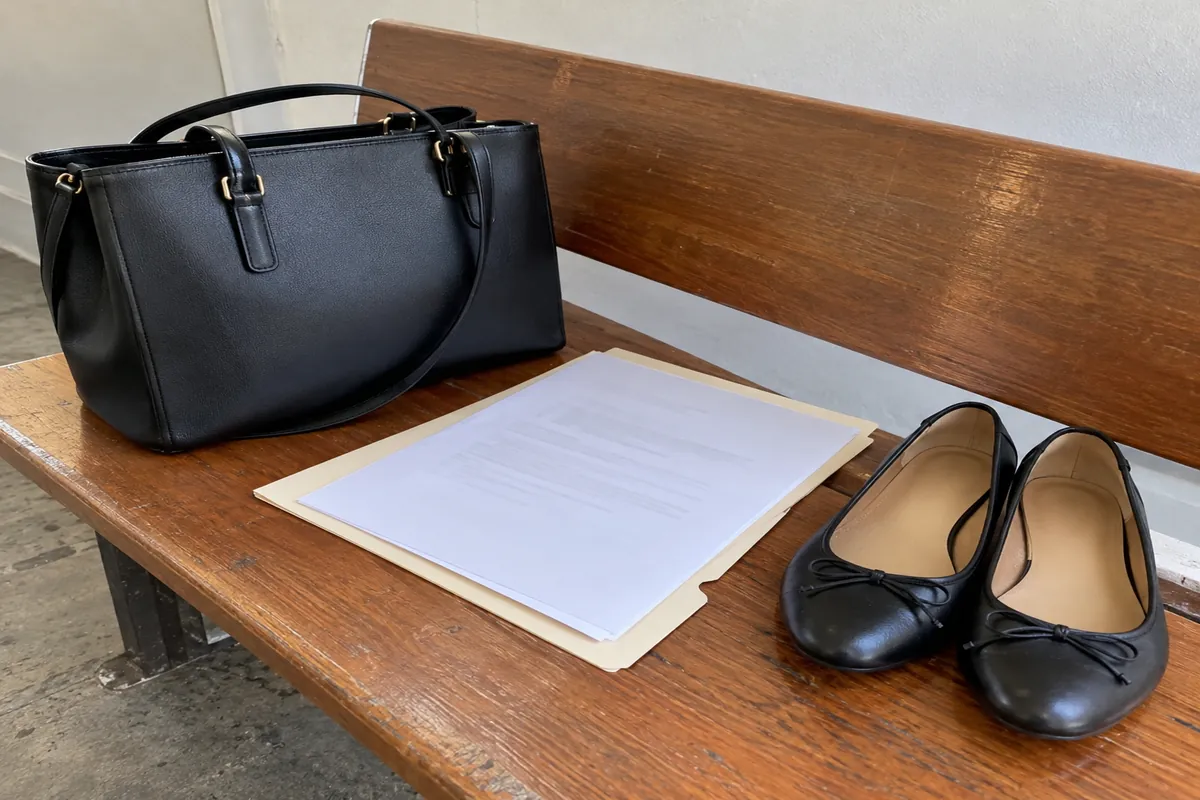
Carry a folder with copies of your résumé and a short list of questions. A plain folder looks more professional than a bag stuffed with papers.
Common mistakes
- Choosing an outfit you have never worn, which may feel stiff or fit differently than you expect.
- Wearing a shirt that gapes at the buttons when you sit.
- Dressing much more formally than the company, which can read as out of step.
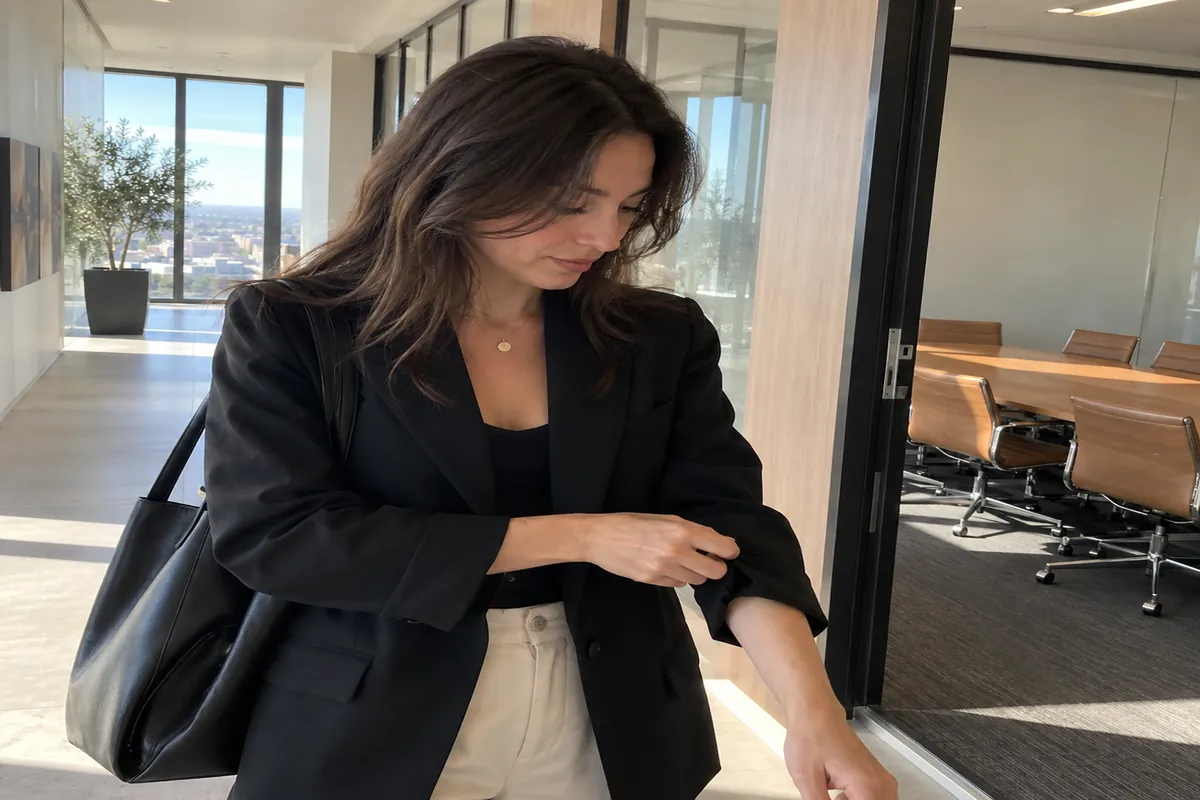
- Using a bag that is too large for the outfit, or too small for your notebook and folder.
- Forgetting to remove a visible label or a security tag.
For a second round or a video call
For a second round, change one piece to show that you planned the day, such as a different top or a new scarf. The fit should still be right. For a video call, pay more attention to the top half of the outfit, since that is what the camera shows, and to colors that stand out against your background. A solid color looks cleaner on screen than a fine print, which can shimmer.
If you are also deciding what to wear to the workplace afterwards, read our guide to business casual for women, which explains how the standard changes from one office to another.
Lipstick and makeup for the day
Keep makeup close to your everyday look, with a finish that stays put for a full hour of talking. A shade close to your natural lip works well. For a complete shade guide, read our lipstick guide for the office.
Interview panels and video rounds
Panel interviews put several people in front of you at once. Dress for the most formal person likely to be in the room, usually the senior member you may meet. Keep the jacket on for the whole session, because removing it mid-way can break your rhythm. Wear a top that does not need adjusting when you lean forward to write notes.
Video rounds change the frame. The camera usually shows the shoulders and the head. A structured jacket looks sharp, but a jewel-toned top or a soft texture photographs better than fine stripes, which can shimmer on some screens. Test your camera and light the room from the front before the call, and keep a plain background if you can.
What to bring with you
Bring copies of your résumé on paper, even if you sent it electronically, and a short list of questions. Keep a pen in a jacket pocket rather than in your hand. If you carry a phone, switch it off before you enter the building and keep it in a bag, not in a pocket that shows through the fabric.
Frequently asked questions
Should I wear a suit to every interview?
Not always. A suit fits finance, law and senior roles. For creative or tech jobs, a tailored jacket with trousers or a dress makes the same point without the formality.
Are open-toe shoes acceptable?
In many offices, yes. Choose closed-toe shoes if you are unsure, and keep heels to a height you can walk in comfortably for the whole visit.
How much jewelry is too much?
One ring, small earrings and a watch or a simple necklace is enough. Avoid anything that rings, clicks or catches on fabric during a handshake or a long answer.
What should I do if the company is casual?
Dress one level above the team's normal clothes. You can always relax your look on day two. Being underdressed is harder to recover from than being a little formal.
Can I wear the same outfit for a second round?
Yes, provided it is clean, pressed and fits well. A second round is a good moment to wear a different top so the interviewers see that you planned the day.