Tailoring
How a Women's Suit Should Fit: Shoulders, Waist, Sleeves and Length
Most suit problems start at the shoulder seam. Fix that first, then everything else follows.
In shortA well-fitted suit jacket ends at the shoulder seam, follows the waist without pulling, and has sleeves that show a short strip of shirt cuff. Trousers should break lightly over the shoe. Tailoring changes a good off-the-rack suit more than the brand does.
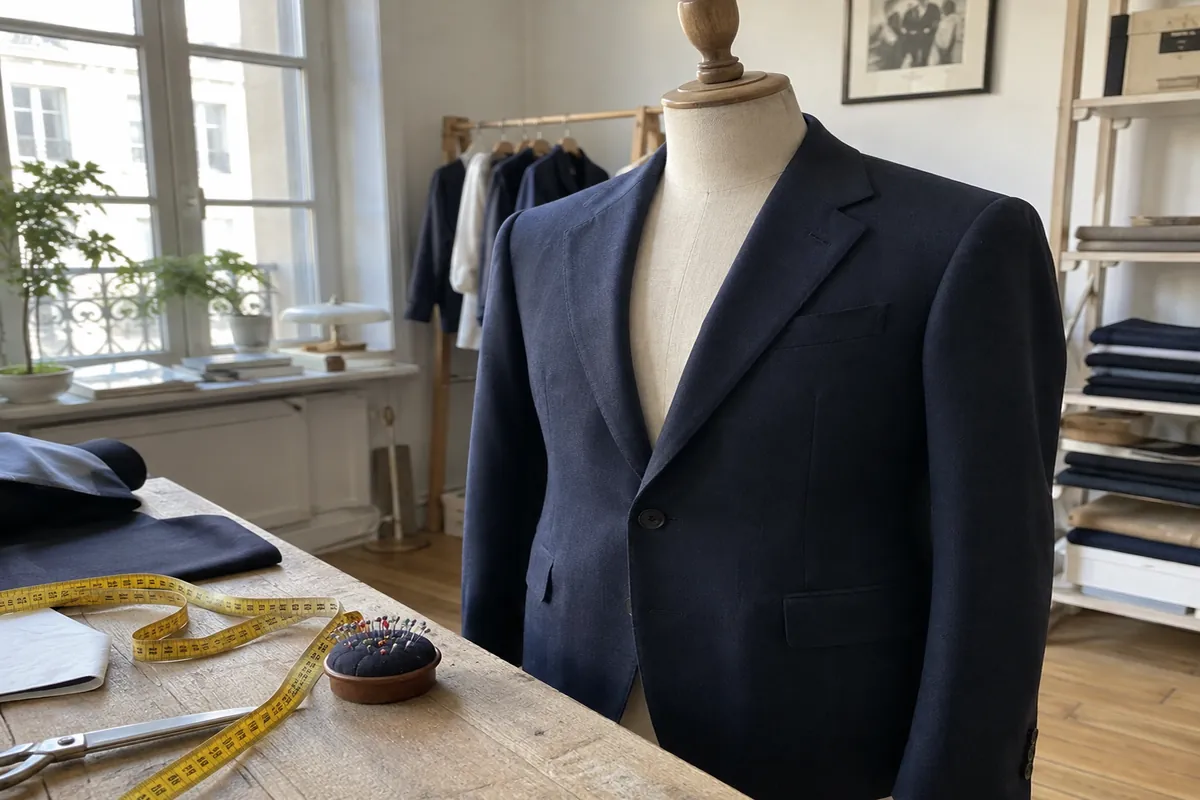
A suit that fits well looks expensive even when it is not, and a suit that fits badly looks wrong even when it is excellent. Most fit problems start at the shoulders and spread from there. Learn to check the jacket first, then the sleeves, the waist and the trousers, and you will know quickly whether a suit can be tailored or should be left on the rail.
The shoulders decide everything
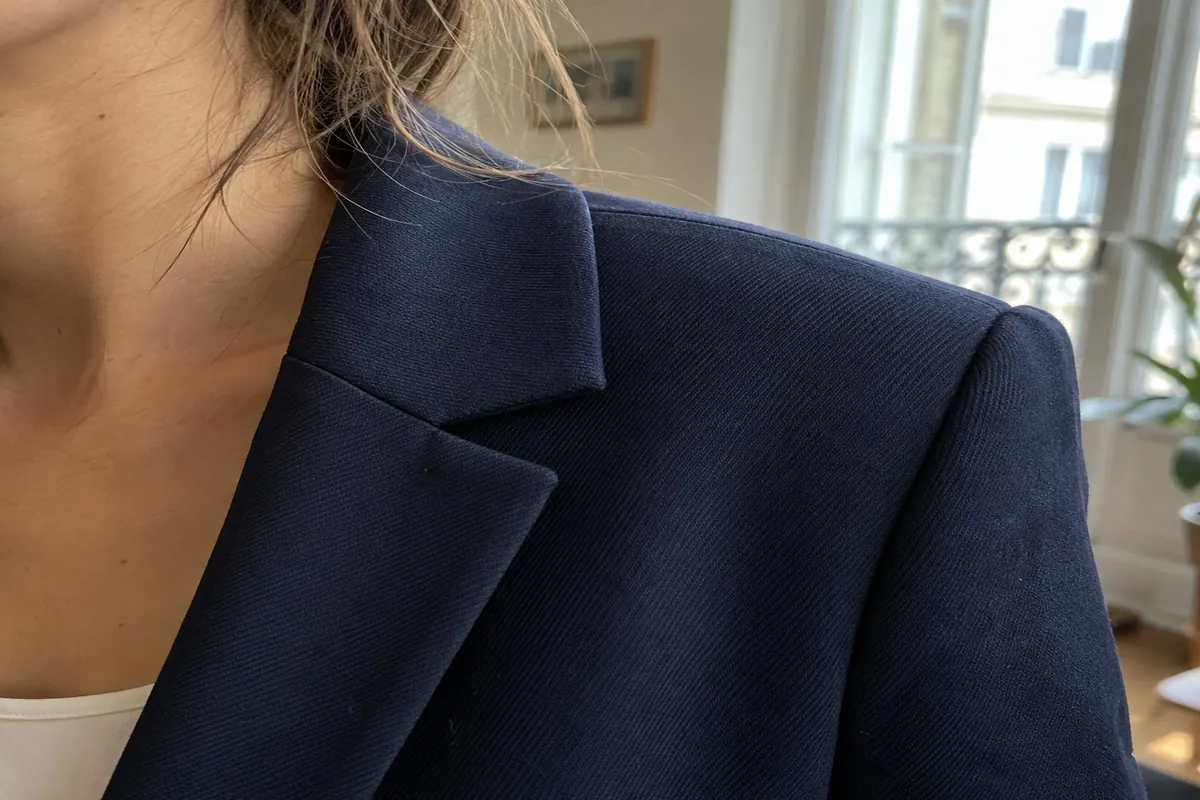
The shoulder seam should sit at the edge of your shoulder, not sliding down your arm and not sitting high on the neck. The fabric should lie smooth across the top of the shoulder, without pulling or drooping. Tailors can take in a jacket at the sides or move a few sleeve details, but they cannot easily make a shoulder larger or smaller. For that reason, buy the size that fits your shoulders, and let the rest be adjusted.
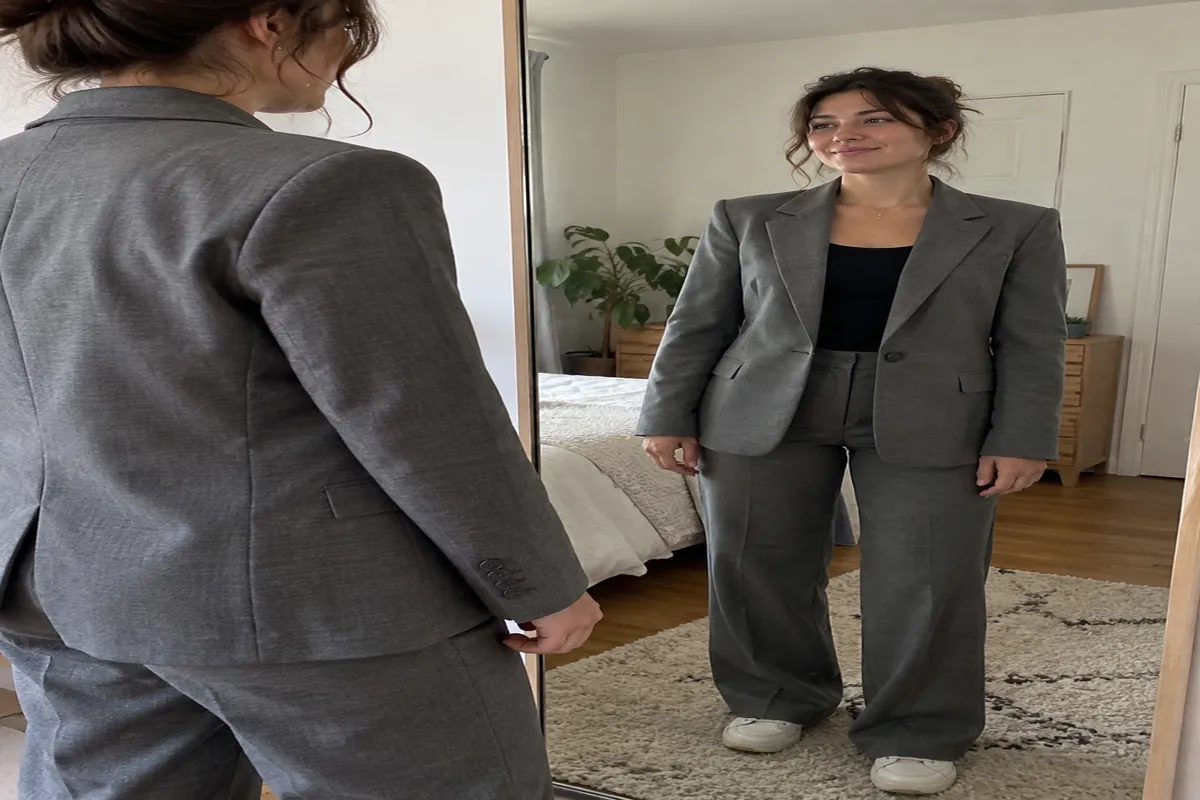
Stand in front of a mirror with your arms relaxed. If the shoulder seam sits well inside the edge of your shoulder, the jacket is too large. If the fabric pulls across the back or the chest, it is too small.
Sleeves and the cuff
With your arms relaxed, the sleeve should end at the base of your thumb or just above it. When you bend your elbows, the sleeve should move with you without riding up. Your shirt cuff should show about half a centimeter to one centimeter beyond the jacket sleeve. Too much cuff looks careless, while none at all looks cramped.
The waist and the buttons
A two-button jacket should close on the top button without the fabric pulling across the bust or hips. If the jacket gapes when you button it, check whether the waist is too large or whether the jacket is cut for a different shape. Darts and side seams can be adjusted. A slight curve at the waist is normal, but wrinkles that run diagonally from the buttons show a poor fit.
Interactive tool
True or false: does the suit fit?
Open each statement to check it against the guide.
1. The shoulder seam should sit on the edge of the shoulder.
True. A seam that sits inside the shoulder edge often means the jacket is too large. A seam that slides down the arm is hard to fix, so it is a sign to try a different size.
2. Sleeves should reach the wrist bone when your arms are relaxed.
False. They should end at the base of the thumb or just above it, so the shirt cuff shows a little.
3. A jacket that gapes at the buttons is a sign that the waist needs tailoring.
True. Usually a tailor can take in the side seams and darts. Check first that the shoulders are right, because shoulders are harder to change.
4. Trousers should have a long break so they fall over the shoe.
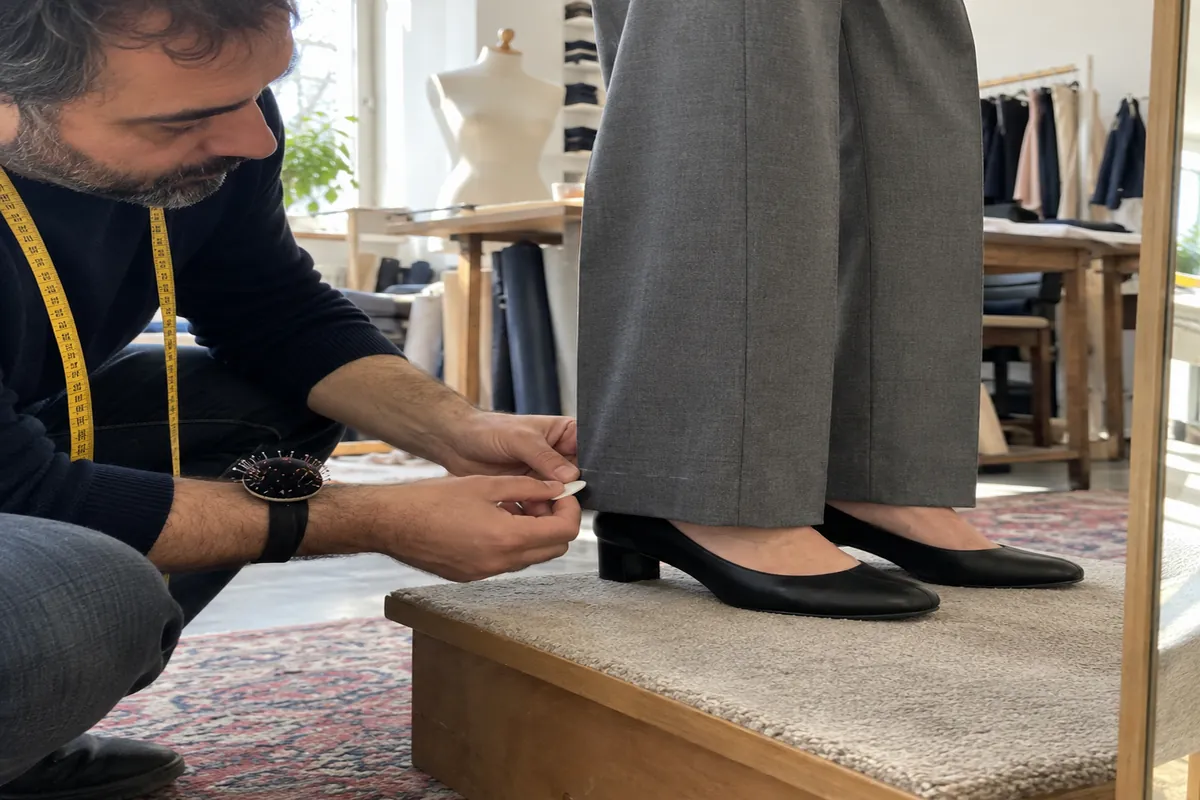
False. A light break, where the front of the trouser just touches the top of the shoe, looks cleaner for most cuts. Test the length in the shoes you will wear.
5. A suit should be tested only while standing still.
False. Sit down, cross your legs, raise your arms and reach forward. The jacket should move with you and the back should lie flat.
Trousers and skirts
Trousers should sit at the natural waist, with a smooth line over the hips and seat. The leg should skim the calf without clinging. The hem should be level at the back and touch the top of the shoe at the front. Tailors often adjust the hem and the waist, and can taper a leg if it is too wide.
A pencil skirt should sit at the natural waist and finish just at or below the knee. It should allow a full step without pulling at the seams or the slit. If the skirt pulls across the hips when you sit, it is too tight for regular wear.
Fabric and structure
Good wool holds its shape and recovers after a day of sitting. Blends can look smooth at the start and lose their shape faster. Check the lining too: it should move with the fabric and should not bunch at the armpit. A structured jacket with shoulder padding that is not too heavy gives the most polished line for most offices.
Tailoring that is worth paying for
Some changes are worth the cost, and others rarely are. A hem, a sleeve shortening and a waist take-in usually pay off. Changing the shoulder shape or the overall cut is rarely worth it. If a suit needs more than three significant changes, you may be better off buying a different size or cut.
Before you buy
Try the suit with the shoes you will wear, the top you will wear under the jacket, and a bag that is similar in weight to your usual one. Wear it for at least ten minutes. If it still feels right, you have a suit you can repeat across many days.
To build the rest of the outfit around the suit, see our guide to a work capsule wardrobe, or read what to wear to a job interview.
How to talk to a tailor
Bring the shoes you plan to wear with the suit, and the bag you usually carry, because both change the hem and the drape. Tell the tailor where the suit feels wrong in your own words, such as pulling at the buttons or sitting too low at the waist. A good tailor will ask you to move, sit and lift your arms before marking anything. Ask what the alteration will change, and whether it can be reversed if you decide to keep the suit in a different state later.
Keep the receipt and the alteration note together. If you return to the same tailor, the note helps them match the fit quickly, and it gives you a record of what worked.
Suits for different body shapes and jobs
Good tailoring is about proportion rather than a single ideal. A structured shoulder can balance wider hips, and a softer shoulder can suit a narrower frame. A cropped jacket can look modern with a high-waisted trouser, while a longer jacket suits a formal role and covers more of the hip. Choose the proportion that sits well with your body and with the work you do, and let the tailor refine the details.
For a day-to-day suit, look for a fabric that breathes and recovers from sitting. For a formal event, a smoother wool with more structure will photograph well and keep its line. Avoid a suit that looks costume-like because it is too precise for the workplace: a little ease is usually more flattering than a perfectly tight fit.
Frequently asked questions
Can a suit be tailored after I buy it?
Yes. Sleeve length, waist, trouser hem and sometimes the shoulders can be adjusted. Shoulders are the hardest to change, so buy the size that fits there first.
Should a jacket button at the waist?
A two-button jacket should button comfortably on the top button without pulling across the hips or bust. If the jacket gapes or wrinkles, try a different size or a tailor.
What length should trousers be?
Most trousers should just touch the top of the shoe, with a light break at the front. Heels change the length, so have the hem checked in the shoes you will wear with the suit.
Do I need a skirt suit or trousers?
Both work. A trouser suit gives more movement and suits most jobs. A skirt suit looks more traditional. Choose the one you will wear most often, because the fit matters more than the silhouette.
How do I know a suit fits well?
Sit down, raise your arms, and reach forward. The jacket should move with you, the back should lie flat, and nothing should pull at the buttons or the underarm.