Wardrobe
A Work Capsule Wardrobe: How Many Pieces You Really Need
Count combinations before you count clothes. A small wardrobe can work harder than a large one.
In shortA work capsule of 10 to 15 core pieces can produce 30 to 50 outfits when tops, bottoms and layers combine well. Count the outfits with the calculator below, then buy only pieces that add a new combination.
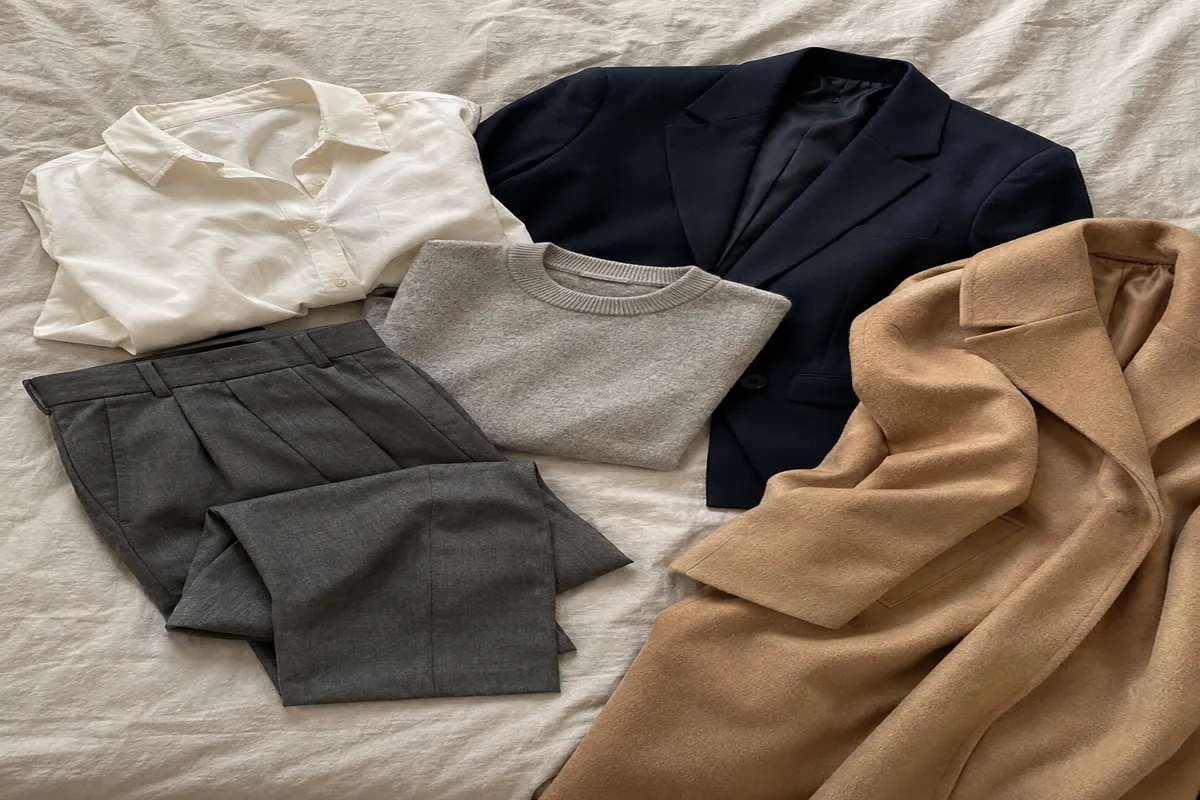
A work capsule is a small set of pieces that combine well. Its value is the number of outfits it produces, not the number of items it contains. A wardrobe of twelve well-chosen pieces can cover a working fortnight without repeating a look, while a wardrobe of forty loosely related pieces can leave you with nothing to wear.
Count combinations, not clothes
The basic count is simple. Multiply your tops by your bottoms. Then add the layers that change the look, such as a blazer or a cardigan, which give you more options with the same base. Finally, add the dresses you can wear on their own. A capsule with five tops, three bottoms, one blazer and two dresses gives you 32 outfits from twelve pieces.
The calculator below uses this method. Change the numbers to match your own wardrobe, and see how each piece changes the total.
Interactive tool
Outfit calculator
Outfits = tops × bottoms × (1 + layers) + dresses. The 1 is the outfit with no layer.
5 tops × 3 bottoms × 2 ways + 2 dresses.
Choose a base palette and stay in it
Most capsules work best with two base colors and one accent. Navy and grey are the usual pair, and camel, cream or ivory are easy neutrals to add. Black is useful for evening events and strict dress codes, but it can feel heavy in bright offices, so use it in one or two pieces rather than the whole wardrobe.
Keep the accent small. One scarf, one bag or one pair of earrings in a color you enjoy is enough. Everything in the capsule should also work with that accent, so it stays in the base palette rather than becoming a new set of pieces.
Pick the pieces that multiply outfits
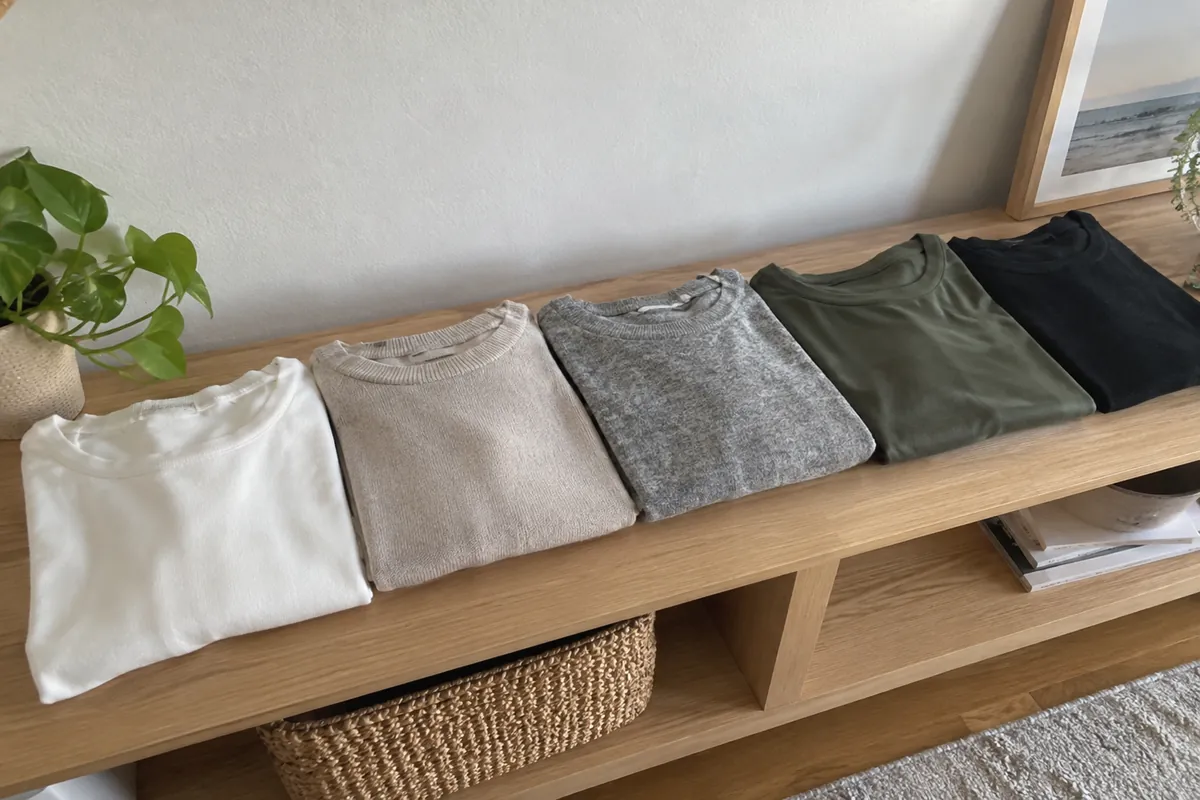
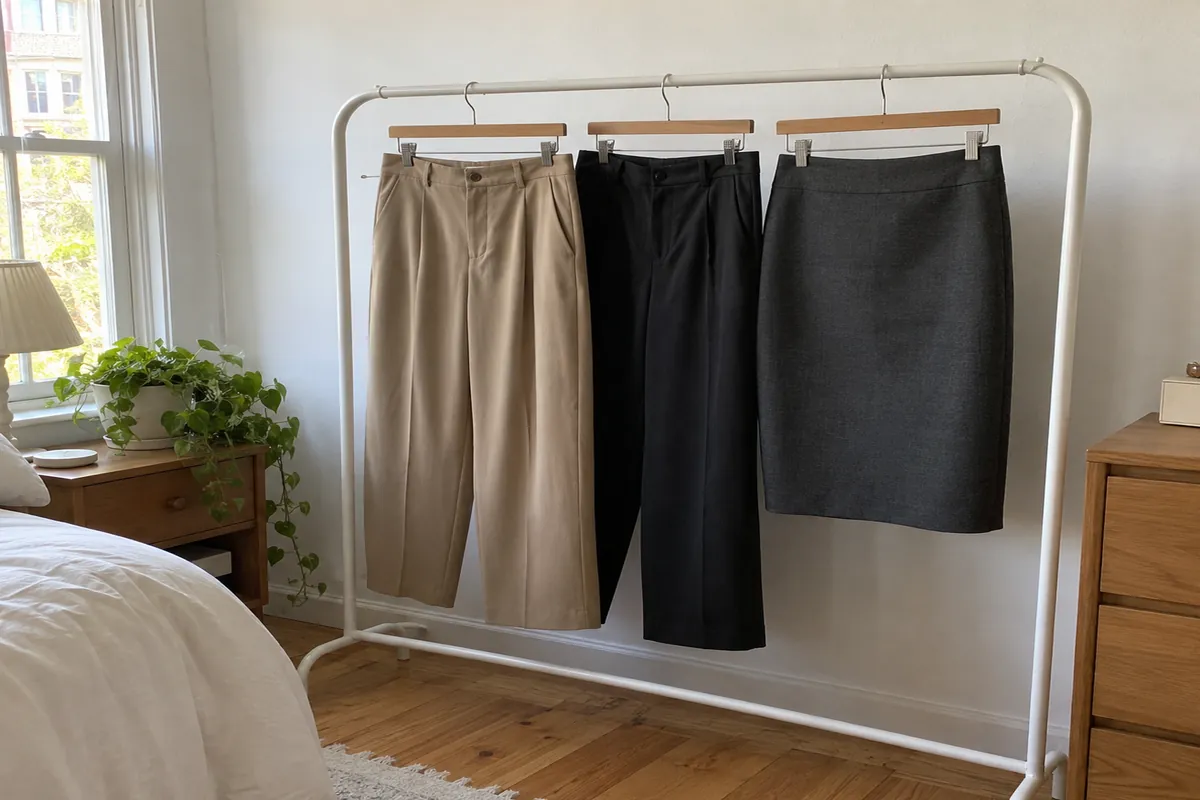
Tops and layers do the most work. Five tops that go with three bottoms and two blazers give you far more options than five specialty pieces. Buy the trousers and skirts first, because each bottom must work with several tops. Then buy one or two layers that change the look of almost everything. A blazer that fits well is the single most useful item in most office capsules.
A simple checklist for each new piece
- Does it work with at least three pieces I already own?
- Would I wear it on a meeting day, not only on a weekend?
- Does the fabric hold its shape after a full day?
- Can I wear it in the shoes I already own?
If the answer to any of these is no, leave it in the shop.
Build a capsule in four steps
- List what you have. Sort tops, bottoms, layers and dresses. Remove anything that no longer fits or no longer suits your job.
- Find the gaps. Look for a missing bottom or layer that would pair with three of your tops.
- Buy one piece at a time. Wear each new piece for a week before you buy the next.
- Review each season. Replace worn pieces with the same color and cut, rather than adding new ones.
What the numbers look like
| Capsule | Pieces | Outfits |
|---|---|---|
| Minimal: 3 tops, 2 bottoms, 1 blazer, 1 dress | 7 | 3 × 2 × 2 + 1 = 13 |
| Core: 5 tops, 3 bottoms, 1 blazer, 2 dresses | 11 | 5 × 3 × 2 + 2 = 32 |
| Full: 7 tops, 4 bottoms, 2 layers, 3 dresses | 16 | 7 × 4 × 3 + 3 = 87 |
The full capsule produces more outfits, but it also needs more care and more storage. The core capsule is a good target for most people, and it can be expanded later if your job changes.
Keep the capsule working
Store the pieces so you can see them. Hang tailored items with wide hangers, fold knits, and keep shoes in a line you can scan in the morning. Note in your phone the combinations you like, so you can repeat them on busy weeks. A small log of what you wore on a stressful day makes the next purchase clearer.
For the fit of blazers and suits, which decide how well layers work, read how a women's suit should fit. For the dress code that sets the boundaries of the capsule, see our dress code decoder.
Plan the capsule around the seasons
A capsule that works in June can fail in January. Divide the wardrobe into a core that lasts all year and a seasonal layer that changes. The core might be the trousers, the shirts and one blazer. The seasonal layer might be a knit in winter, a lighter cardigan in spring and a trench or a structured jacket for the rain. Count the seasonal layer separately, so you know how many outfits you have in each part of the year.
Fabric decides how long a piece lasts. Wool and fine cotton hold their shape with regular care, while thin synthetic blends can pill or lose their drape after a few months of daily wear. Choose one or two fabrics you trust and build the capsule around them. Mixing too many textures in one palette makes the outfits look busy, even when each piece is good.
Shoes, bags and accessories
Shoes and bags multiply outfits without adding much bulk to a wardrobe. Two pairs of shoes that work with trousers and with skirts can double the number of looks. A structured bag in a neutral color works with almost every outfit in the capsule. Add two or three accessories, such as a scarf, a watch or simple earrings, and count them as separate choices in your calculation.
Do not count shoes that are uncomfortable. A capsule with a pair you never wear is a capsule with fewer outfits than it appears to have.
Common capsule mistakes
- Buying five tops that all need the same skirt, which limits the outfits to one bottom.
- Keeping pieces that fit a former role or a former body shape, which makes the capsule feel smaller than it is.
- Choosing an accent color that clashes with the base palette, so each new piece needs its own partner.
- Forgetting the outerwear, which often sets the tone of the whole outfit in cold months.

Frequently asked questions
How many pieces make a work capsule?
Ten to fifteen core pieces covers most weeks when every piece matches at least two others. Add accessories and shoes separately, because they multiply outfits without adding much bulk.
Should a capsule be all black?
Not necessarily. Pick one or two base colors, such as navy and grey, and one accent you wear every week. That keeps the wardrobe coherent without making it dull.
What is the best first purchase for a work capsule?
A well-fitted blazer or a tailored trouser. These two pieces change the look of almost every top you own, and they are the hardest to fake with cheap alternatives.
How do I know if a piece earns its place?
Test it against your calendar. If it works with at least three tops and two bottoms you already own, and you would wear it on a meeting day, it earns its place.
Does a capsule work for people who change jobs?
Yes, if you keep the core neutral and move the accents. Review the list each season and remove items that no longer match the role or the dress code.